How Fuel Quality Impacts Equipment Performance and What You Can Do About It

October 20, 2025

Share this article

How Fuel Quality Impacts Equipment Performance and What You Can Do About It.

Every machine depends on one simple thing: good fuel. Whether you’re running trucks, generators, or marine engines, fuel quality makes or breaks performance. You can buy the best equipment in the world, but if the fuel feeding it is dirty or degraded, it won’t run the way it should.


At DHM Fuel Solutions, we’ve seen what poor fuel quality can do. It causes breakdowns, shortens engine life, and wastes money. The good news is that most of it can be prevented with regular checks, smart handling, and a bit of attention to storage.


What’s Really Hiding in Your Fuel


Fuel starts clean, but it doesn’t always stay that way. Over time, water, dirt, and microorganisms build up inside tanks and lines. Here’s what that means for your engines:


  • Water comes from condensation and leaks. It collects at the bottom of tanks and feeds bacteria.
  • Sediment builds up from dust, rust, and general wear inside the system.
  • Microbial growth, often called diesel bug, thrives where fuel and water meet. It turns into sludge that clogs filters and damages injectors.
  • Oxidation happens when fuel ages, turning it darker and thicker. That thick fuel doesn’t burn efficiently and leaves carbon deposits in engines.


You don’t have to see these contaminants for them to cause problems. Even tiny amounts can affect fuel burn, create smoke, and slowly destroy components.


When Fuel Fights Your Engine


Dirty or poor-quality fuel can make engines work harder than they should. You might notice subtle signs first, like hard starts, rough idling, or slower response. Over time, those little issues turn into big ones.


  • Filters block faster and need constant changing
  • Injectors clog and start delivering uneven fuel
  • Pumps wear out earlier than expected
  • Power drops and fuel consumption increases


We’ve helped customers who replaced parts over and over without realising the issue was the fuel itself. Once we cleaned their tanks and filtered their fuel, performance returned immediately.


How Fuel Quality Slips Over Time


Fuel doesn’t last forever. It breaks down faster than most people think, especially in storage. Factors like heat, water, and oxygen cause the chemical structure to change. After just a few months, diesel can start to oxidise. After a year or two, it may not even meet basic quality standards.


If your tanks sit unused for long periods, the risk grows. That’s why backup generators and low-use storage tanks often end up with the worst contamination. The longer the fuel sits still, the more it separates and degrades.


Simple Steps to Keep Fuel at Its Best


Maintaining good fuel quality isn’t complicated, but it does take consistency. Here’s what every operator should do:


  1. Check tanks regularly for signs of water, rust, or sludge.
  2. Drain condensation from tank bottoms if your system allows it.
  3. Filter fuel before it enters your storage tanks or machinery.
  4. Keep tanks sealed to stop moisture and dust from getting in.
  5. Test samples at least once a year to confirm quality.
  6. Schedule professional cleaning every couple of years or whenever contamination is suspected.


Small habits like these stop small issues from turning into expensive repairs.


When It’s Time to Call in the Experts


Sometimes you need more than a filter change. When contamination gets bad or your system shows signs of heavy sludge, professional cleaning is the only way to fix it properly.


At DHM Fuel Solutions, we use fuel filtration and polishing systems that remove water, dirt, and microbial growth down to fine levels. We can restore most fuel instead of dumping it, which saves you money and reduces waste.


Our team handles everything from confined space tank cleaning to full fuel transfers and disposal. Every job is done safely and in line with environmental regulations, so you know your site stays compliant and your equipment protected.


Good Fuel Equals Reliable Equipment


Clean, high-quality fuel doesn’t just help engines run better. It protects your investment. It means fewer breakdowns, longer equipment life, and consistent performance.


If your machines are losing power, filters are clogging too often, or you’ve had fuel sitting for months, get it checked. A simple inspection or filtration service today could prevent a major repair tomorrow.


DHM Fuel Solutions keeps your tanks clean, your fuel clear, and your business moving. Because when the fuel is right, everything else works the way it should.

Recent Posts

January 29, 2026
Clean fuel is critical in any industry, but offshore the stakes are significantly higher. When fuel quality fails at sea, there is no quick fix, no roadside assistance and often no margin for error. For boats and commercial vessels, marine fuel tank cleaning is a vital part of operational safety, reliability and compliance. Marine environments accelerate fuel contamination. Moisture exposure, long storage periods and variable fuel quality create conditions where sludge, water and microbial growth can develop unnoticed. Without regular inspection and professional cleaning, fuel tanks can quickly become a hidden risk. Why Marine Fuel Systems Are More Vulnerable Marine fuel systems face challenges that land-based fleets rarely encounter. Salt air, high humidity and constant temperature fluctuations cause condensation inside fuel tanks. This water settles at the bottom of the tank, where it creates the ideal environment for contamination. Diesel systems are particularly vulnerable, but petrol tanks are not immune. Common contributing factors include: Long periods of low fuel turnover Infrequent inspections Fuel sitting through seasonal downtime Exposure to humid and coastal conditions Variable fuel quality at marinas and ports Over time, even well-maintained vessels can experience fuel degradation without obvious warning signs until problems arise underway. Common Marine Fuel Tank Contamination Issues Water Contamination Water is the most common contaminant in marine fuel tanks. Condensation forms as tanks cool overnight and warm during the day, especially in partially filled tanks. Water leads to corrosion, filter blockages and, in diesel systems, microbial growth. Microbial Growth in Marine Diesel Marine diesel fuel tanks are highly susceptible to microbial contamination, often referred to as diesel bug. Microorganisms live at the interface between fuel and water, producing thick sludge and acidic by-products. This sludge can rapidly clog filters, restrict fuel flow and damage injectors, often without warning. Sludge and Sediment Build-Up As fuel ages, it oxidises and degrades, forming sludge that settles at the bottom of tanks. Sediment from corrosion, dirt and organic matter further increases contamination levels. Rough seas can stir up this sludge, drawing it into the fuel system at the worst possible time. Fuel Degradation Marine fuel is often stored for extended periods, especially in seasonal or standby vessels. Over time, petrol and diesel degrade, creating gums and varnish that coat internal tank surfaces and fuel lines. The Risks of Contaminated Fuel Offshore F uel contamination offshore is more than an inconvenience. It is a serious safety risk. Potential consequences include: Engine failure at sea Loss of propulsion in hazardous conditions Increased fire risk in petrol systems Damage to high-pressure injection components Emergency call-outs and costly recovery operations For commercial vessels, fuel contamination can also lead to missed schedules, regulatory scrutiny and reputational damage. Clean fuel is not just about performance. It is about ensuring vessels can operate safely, predictably and compliantly. Marine Fuel Tank Cleaning vs Land-Based Cleaning Marine fuel tank cleaning requires specialised procedures and safety controls that differ from land-based tank cleaning. Key differences include: Confined space entry in marine environments Increased vapour management requirements Explosion risk in petrol systems Marine-grade waste handling and disposal Working around vessel structures and stability considerations Because of these factors, marine fuel tank cleaning should only be performed by trained professionals using intrinsically safe equipment and compliant processes. Safety Standards in Marine Fuel Tank Cleaning Safety is paramount when cleaning fuel tanks on vessels. Professional marine fuel tank cleaning adheres to strict safety standards, including: Confined space entry procedures Gas and vapour monitoring Intrinsically safe tools and lighting Ignition source control Spill prevention and environmental protection Compliance with marine safety regulations These controls protect not only personnel but also the vessel, surrounding waters and port facilities. Diesel vs Petrol Marine Tank Cleaning Marine Diesel Fuel Tank Cleaning Diesel tank cleaning focuses on removing: Water from the tank base Microbial sludge and biofilm Sediment and corrosion particles In many cases, diesel fuel can be filtered and polished during cleaning, allowing usable fuel to be retained rather than disposed of. Boat Petrol Tank Cleaning Petrol systems require heightened vapour control due to flammability risks. Cleaning focuses on: Removing degraded fuel residues Clearing sediment and particulates Managing vapours safely throughout the process Each fuel type requires a tailored approach to ensure safety and effectiveness. When Should Marine Fuel Tanks Be Cleaned? There is no universal schedule, but common indicators include: Repeated fuel filter blockages Water detected during inspections Engine hesitation or power loss Unusual fuel odours Sludge visible in tank inspections Long periods of fuel storage As a general guide, many marine operators benefit from inspection every 12 months and cleaning every 12 to 36 months, depending on usage and conditions. How DHM Fuel Solutions Supports Marine Vessels DHM provides specialist marine fuel tank cleaning services for commercial vessels, workboats and marine fleets operating in demanding environments. Each service is tailored based on: Vessel type and fuel system configuration Fuel type and storage volume Operational criticality Environmental exposure and risk DHM’s approach prioritises safety, fuel quality restoration and long-term reliability, helping vessel operators reduce risk and avoid fuel-related failures offshore. Why Proactive Cleaning Matters at Sea Marine fuel contamination often develops silently. By the time symptoms appear, the vessel may already be at risk. Proactive marine fuel tank cleaning helps:  Prevent breakdowns offshore Extend engine and injector life Reduce emergency call-outs Improve safety and compliance Protect high-value marine assets For vessels operating beyond immediate assistance, clean fuel is a non-negotiable requirement.
January 21, 2026
Explore fuel filtration systems for trucks, machinery and marine vessels, and how professional diesel filtration improves fuel quality and fleet reliability.
January 13, 2026
Compare diesel and petrol tank cleaning requirements, common contaminants, treatment methods, and how professional cleaning keeps fleet fuel systems reliable. If you want them more aggressive for SEO, more brand-led, or localised (Brisbane, Gold Coast, SE QLD), say the word and I’ll lock that in as your default too.
Looking down into an industrial tank; orange-suited worker is inside the tank with a hose.
January 7, 2026
Discover 7 warning signs of fuel contamination and sludge, and learn when to schedule professional fuel tank cleaning to prevent downtime and costly repairs.
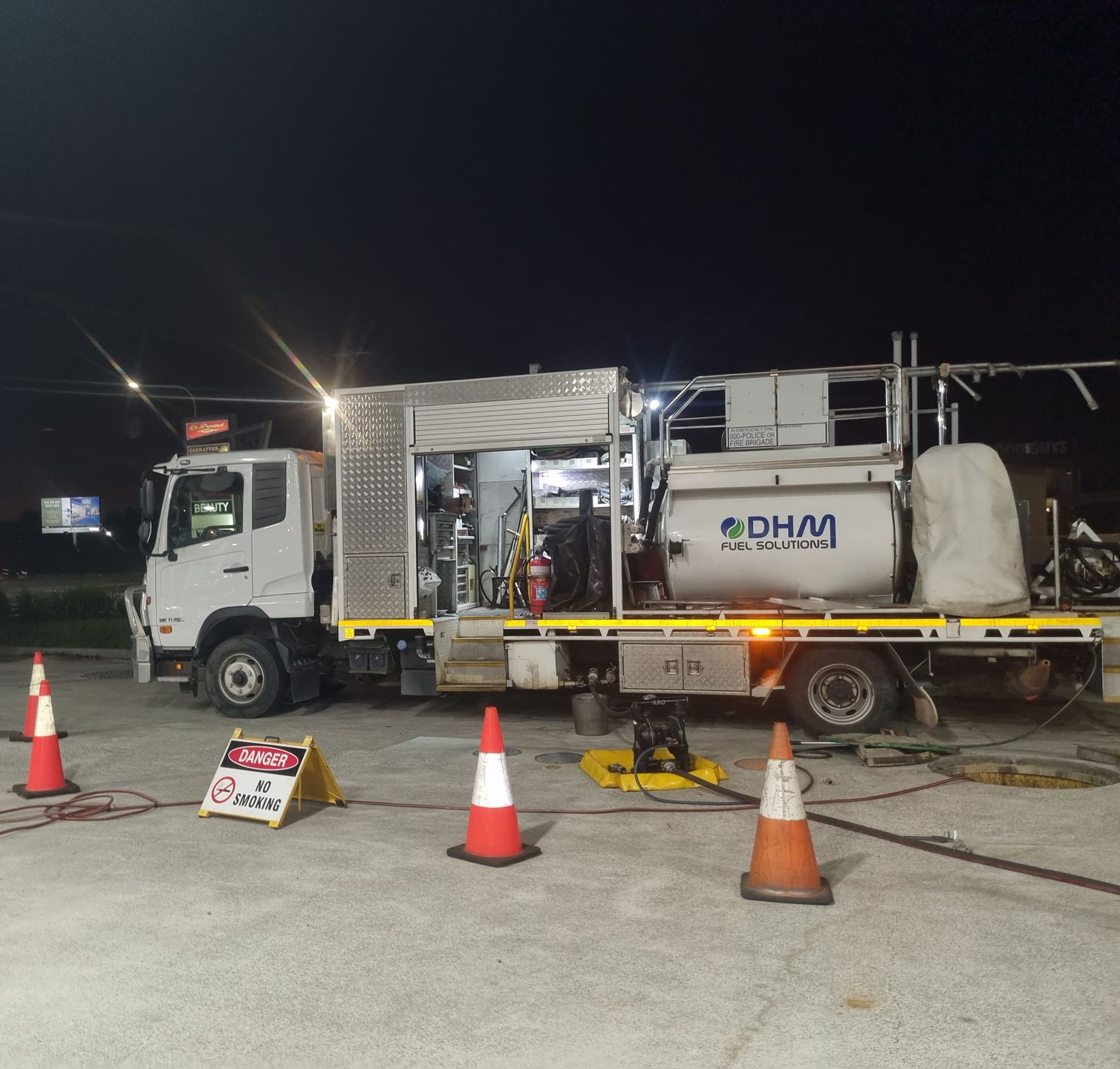
White truck with mounted equipment at a gas station. Orange cones placed near the vehicle.
October 20, 2025
Keep your fuel clean and your business running. Learn how DHM Fuel Solutions helps fuel sites prevent contamination and keep systems performing at their best.
Truck with a large white cable reel parked near a pier. Dusk with clouds, yellow flashing light on top.
October 20, 2025
Learn how to manage marine bunkering and fuel transfers safely, prevent contamination, and protect your vessel with DHM Fuel Solutions.
Rusty metal interior with liquid, possibly condensation, pooling at the bottom and corner.
October 20, 2025
When it comes to keeping your equipment or vessels running smoothly, one of the most overlooked maintenance tasks is fuel tank cleaning.